Kitchen Countertops Compared: Granite, Quartz, and Other Choices for Everyday Cooking
Quick Answer: Which Kitchen Countertop Is Best?
Granite is a practical choice for busy Indian kitchens because it handles heat well. Quartz offers a modern look and is easy to clean. Marble adds beauty but needs more care. Tiles provide a range of colours and designs at different price points.
The best option depends on your cooking habits, budget, and cleaning routine. For a premium modular kitchen, choose a countertop that looks good and supports everyday cooking.
Key Takeaways
- Granite suits regular cooking and offers natural patterns.
- Quartz is easy to clean and comes in many colours.
- Marble looks elegant but can stain or develop dull marks.
- Tiles offer design choices but need regular grout cleaning.
- The right countertop height makes cooking more comfortable.
- Material, size, finish, and fitting affect the final cost.
Introduction
A kitchen countertop is one of the most-used parts of your home. You chop vegetables, roll dough, prepare meals, and place utensils on it. The surface must handle daily work without becoming difficult to clean.
It should also match your kitchen design.
Choosing the right material can be confusing. Granite, quartz, marble, and tiles all have different benefits. Some handle heat well, while others offer a more uniform finish or a wider range of colours.
Before you choose, think about how you cook. Consider your budget, available space, and how much care you can provide. This guide compares popular kitchen countertops to help you choose the right surface for your home.
Granite Kitchen Countertops: Strong and Practical
Granite is a natural stone. It is widely used in Indian kitchens because it is durable and handles heat well. It also comes in many shades, with patterns that vary from slab to slab.
Benefits of granite
- It handles heat well during everyday cooking.
- It provides a strong surface for food preparation.
- It comes in natural colours and patterns.
- With proper care, it can last for years.
- It suits both traditional and modern kitchens.
Granite still needs care. Some types absorb liquids more easily than others. These surfaces may need sealing to help prevent stains: clean spills quickly, especially oil, tea, coffee, and coloured sauces.
When comparing granite kitchen countertops, inspect the full slab before buying. A small sample may not show the complete pattern.
Which granite colours should you choose?
Popular granite kitchen countertop colours include black, white, grey, beige, and brown.
Black granite creates a bold look with white cabinets. White and beige shades can make a small kitchen feel brighter. Grey granite works well with many modern designs.
Choose a colour that suits your cabinets, floor, and backsplash. Also think about cleaning. Some dark surfaces show water marks, while some light surfaces show stains more clearly.
Quartz Kitchen Countertops: A Modern Option
Quartz countertops are engineered surfaces made with quartz minerals, resins, and pigments. This process helps create consistent colours and patterns.
Quartz kitchen countertops are popular in modern homes because they are easy to clean and offer many design choices.
Why choose quartz?
- It is easy to wipe clean.
- It resists many common stains.
- It comes in plain and patterned finishes.
- Most products do not need regular sealing.
- It can suit simple or premium kitchen designs.
Quartz has one important limit. Its resin content makes it sensitive to intense heat. Do not place a hot pan straight from the stove onto the surface. Use a heat-resistant mat or trivet instead.
Is quartz suitable for Indian cooking?
Yes, quartz can work well in Indian kitchens. It provides a smooth work surface for chopping vegetables, rolling dough, and preparing meals.
However, you must protect it from direct heat. This is especially important when you're cooking several dishes at once.
Before choosing quartz for kitchen countertops, ask about the warranty, thickness, and care instructions. If your counter is long, ask the installer how the joints will look.
Marble Countertops: Beautiful but Need More Care
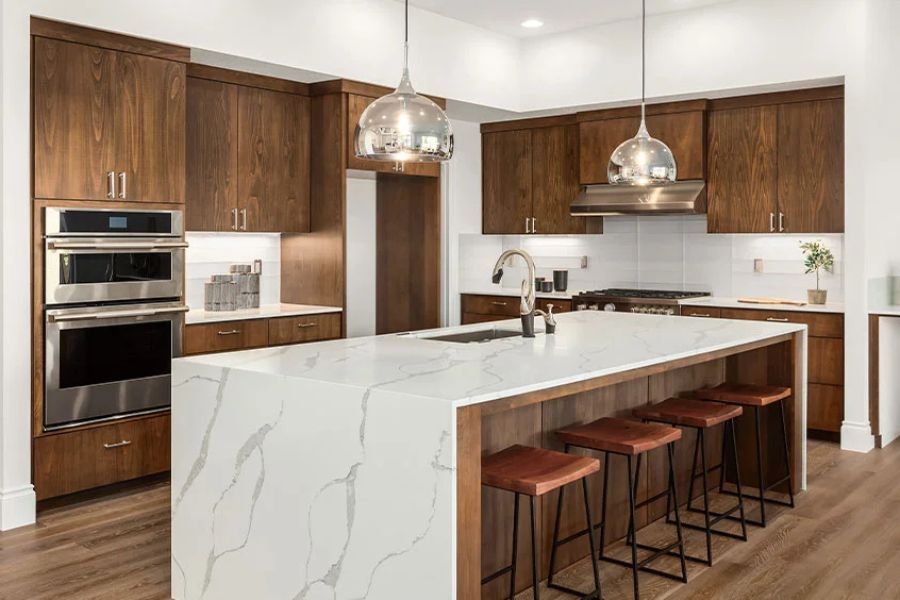
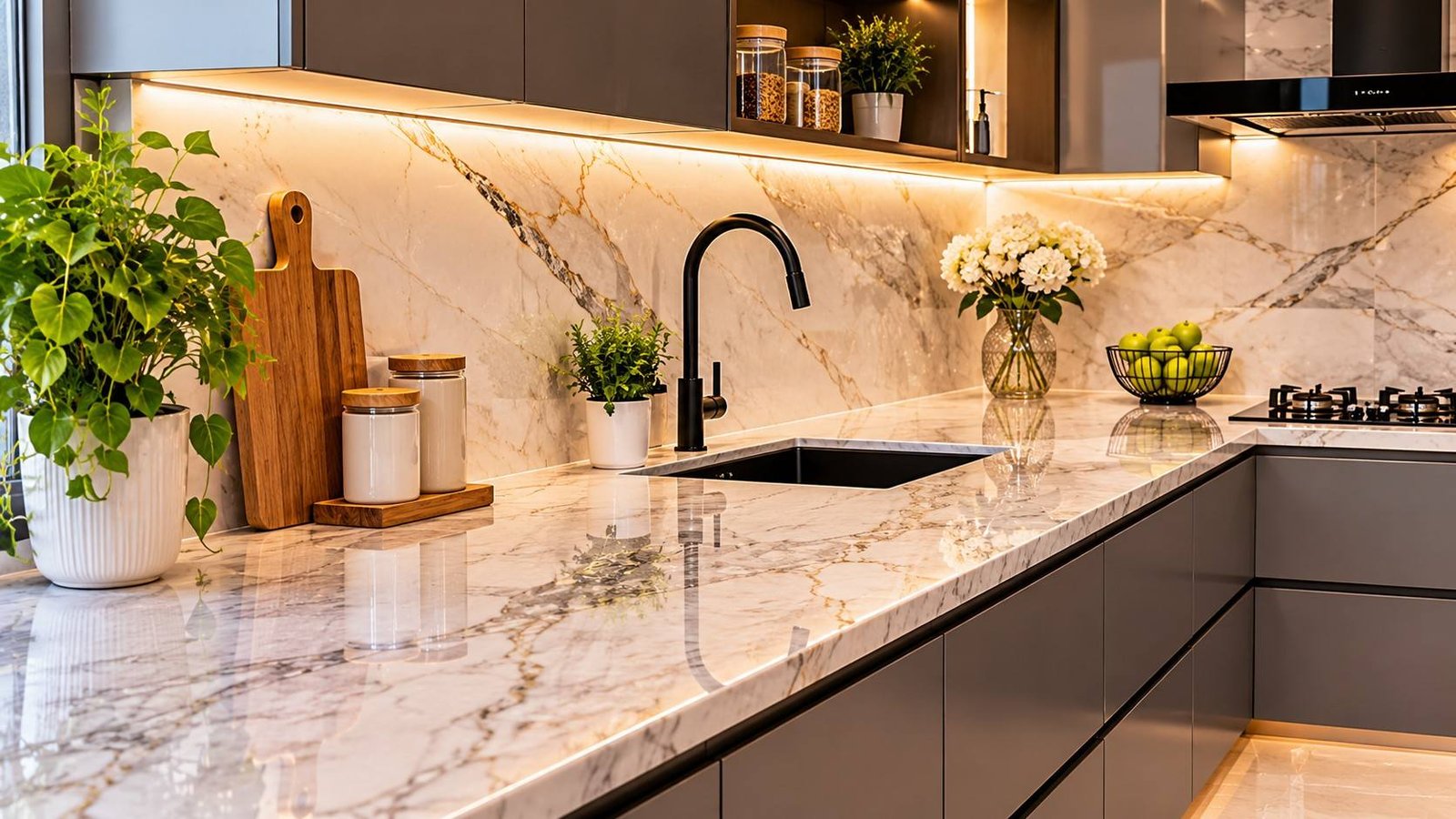
Marble is known for its natural veins and elegant appearance. It can give a kitchen a classic, luxurious feel. White and cream marble work well with both light and dark cabinets.
However, marble needs more attention than many other countertop materials.
Lemon juice, vinegar, and tomato can leave dull marks. Oil and coloured liquids may also cause stains. Marble can scratch, so use a chopping board when preparing food.
Wipe spills quickly and use cleaners designed for marble. Some marble surfaces also need sealing.
Marble may suit homeowners who value its natural beauty and are willing to maintain it. If you want a similar look with less routine care, consider quartz with a marble-inspired pattern.
Read also:- 6 Premium Materials That Define a Luxury Modular Kitchen by Betula Kitchen
Other Kitchen Countertop Materials
Granite and quartz are not the only options. Tiles and other surfaces may also suit your home.
|
Material |
Main benefit |
What to consider |
|
Porcelain or sintered stone |
Modern look and good resistance to stains and heat, depending on the product |
Needs skilled cutting and fitting |
|
Ceramic or porcelain tiles |
Many colours and patterns |
Grout lines need regular cleaning |
|
Solid surface |
Smooth look with fewer visible joints |
Can scratch or suffer heat damage |
|
Laminate |
Often costs less and comes in many designs |
Protect it from heat and water at the edges |
|
Stainless steel |
Easy to clean and handles heat well |
Scratches and water marks may show |
Each material has its own strengths. The right choice depends on your budget, cooking habits, and design needs. Ask the supplier about care requirements before you buy.
Granite vs Quartz: Which Is Better?
Both materials work well in many homes, but they offer different benefits.
|
Feature |
Granite |
Quartz |
|
Material |
Natural Stone |
Engineered surface |
|
Heat resistance |
Generally high |
Needs protection from direct heat |
|
Appearance |
Natural patterns |
More consistent colours |
|
Stain Care |
May need sealing |
Usually does not need sealing |
|
Cleaning |
Simple with suitable care |
Easy for daily use |
|
Style |
Natural and varied |
Modern and uniform |
Choose granite if you prefer natural stone and good heat resistance. Choose quartz if you want consistent patterns and easy daily cleaning.
Neither material is best for every kitchen. Think about your cooking routine and maintenance needs before making a final choice.
What Is the Right Kitchen Countertop Height?
A countertop should feel comfortable to work at. If it is too high or too low, you may need to bend or stretch while cooking.
A common starting point for kitchen countertop height is 34 to 36 inches, including the countertop. The best height depends on who uses the kitchen and the overall layout.
Before fixing the height, check these points:
- Can you chop food without bending too much?
- Can you reach the back of the counter?
- Is the sink comfortable to use?
- Does the height work with your hob and appliances?
Ask your kitchen designer to confirm the final measurement before the cabinets are installed. A comfortable height can make daily cooking easier.
How to Choose the Right Kitchen Countertop Size
The correct kitchen countertop size depends on your kitchen layout, cabinet dimensions, and available space.
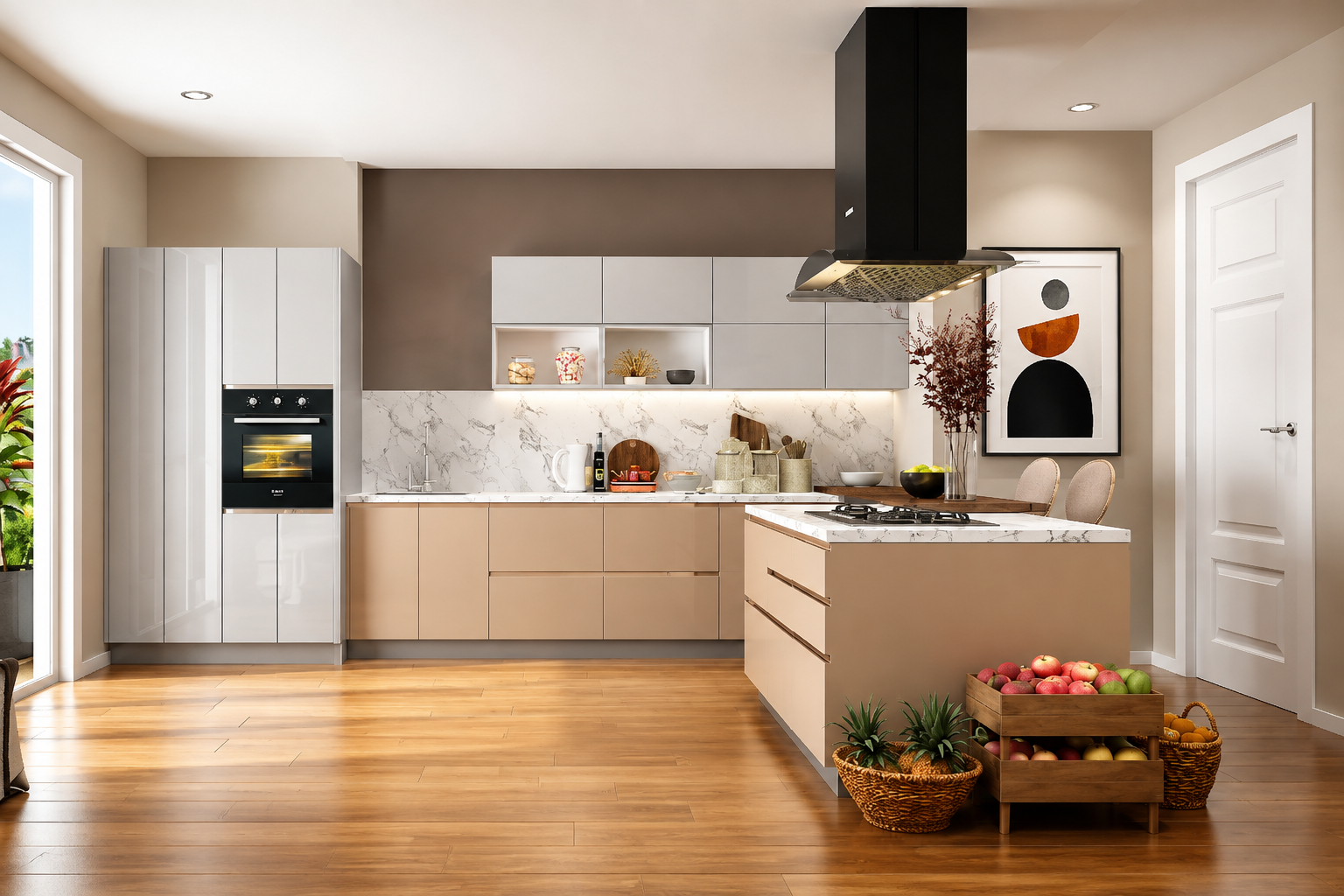
A straight kitchen usually has one main work surface. An L-shaped kitchen uses two walls. A U-shaped kitchen offers work areas along three sides.
Many standard counters are around 24 inches deep, but the exact size depends on your cabinets and appliances.
Plan enough space for food preparation. Leave room around the sink and hob. Also leave space for ingredients, utensils, and small appliances.
Measure the kitchen before ordering the material. Also check the sink and hob sizes. Confirm all measurements with your designer and installer to avoid costly changes.
Matching Countertops with a Premium Modular Kitchen
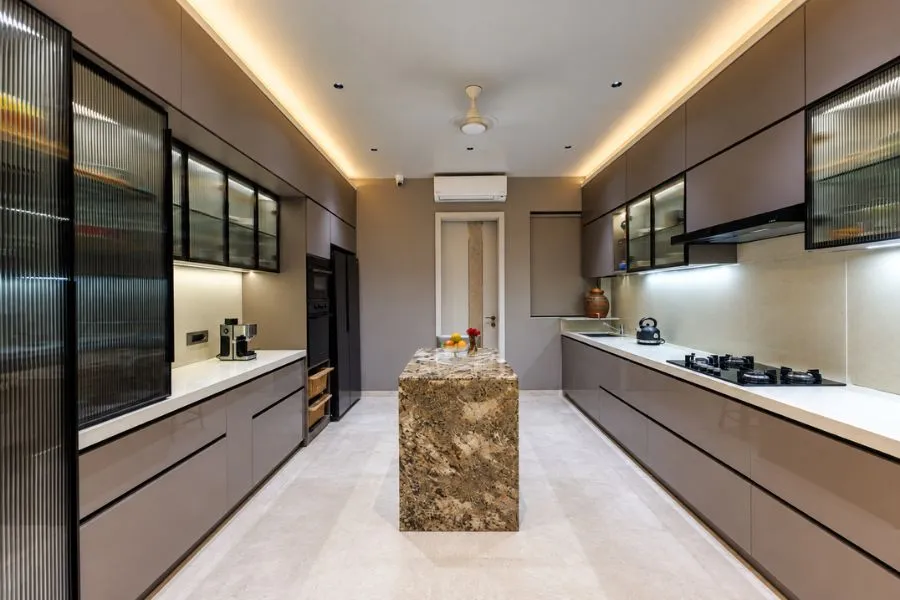
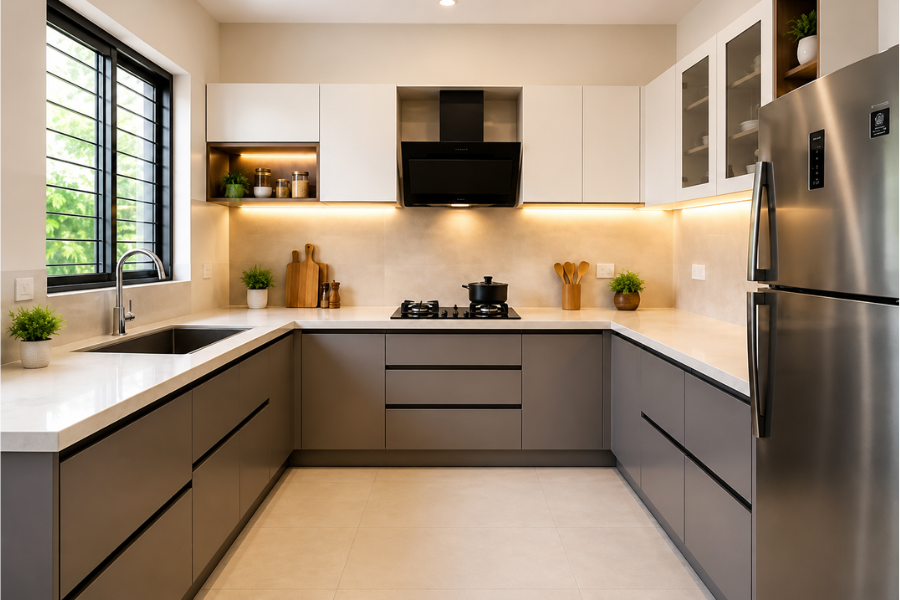
In a premium modular kitchen, the countertop should work with the cabinets, handles, backsplash, and lighting. The goal is to create a balanced look that also suits everyday use.
Here are a few combinations to consider:
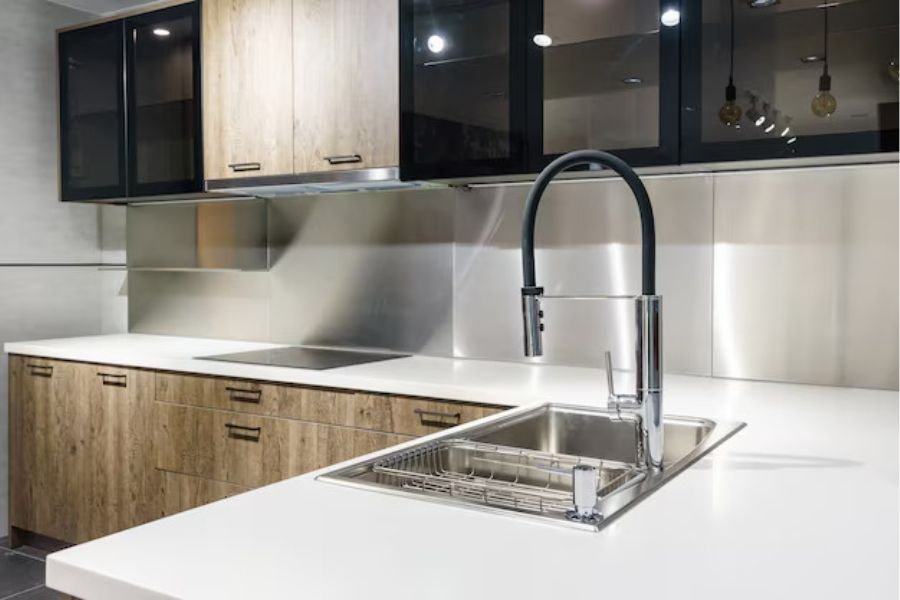
- White quartz with wood-finish cabinets creates a warm, bright look.
- Black granite adds contrast to white cabinets.
- Grey countertops suit clean, modern designs.
- Beige stone pairs well with warm wood shades.
- Marble-look quartz offers a refined style with easier routine care than natural marble.
Do not choose a colour from a photo alone. Ask to see a larger sample and check it under your kitchen lighting. A shade can look different in a showroom and at home.
Also consider cleaning. A plain, glossy surface may show marks more clearly than a patterned one. Choose a finish that suits your lifestyle.
What Affects Kitchen Countertop Cost?
The final price depends on more than the material. Size, finish, cutting, and installation also affect the cost.
The main factors include:
- Material: Different granite and quartz varieties have different prices.
- Thickness: A thicker slab may cost more.
- Size: Larger counters need more material.
- Cut-outs: The sink and hob need carefully cut openings.
- Edges: Special edge designs may add to the cost.
- Installation: Transport and fitting affect the final bill.
- Extra work: A backsplash or special finish may cost more.
Ask for a written quote before ordering. It should list the material, cutting, fitting, transport, and extra work. This makes it easier to compare suppliers.
Simple Tips to Keep Your Countertop Clean
Good care helps keep your countertop in better condition.
- Wipe spills as soon as possible.
- Use a soft cloth for daily cleaning.
- Use a chopping board when cutting food.
- Place hot pans on a heat-resistant mat.
- Avoid harsh cleaners unless the supplier approves them.
- Seal natural stone when needed.
- Check the area around the sink for water leaks.
Do not use the same cleaning product on every material. Granite, marble, and engineered surfaces may need different care. Follow the instructions provided by the supplier.
Frequently Asked Questions
Which countertop is best for Indian kitchens?
Granite is a practical choice because it handles heat well. Quartz is also suitable if you protect it from hot pans.
Are quartz kitchen countertops better than granite?
Quartz offers consistent colours and is easy to clean. Granite provides natural patterns and generally handles heat better. Let your cooking habits guide your choice.
Do granite kitchen countertops need sealing?
Some granite types need sealing to reduce liquid absorption. Ask your supplier whether your chosen stone needs it.
What is the standard kitchen countertop height?
A common starting point is 34 to 36 inches, including the countertop. The best height depends on your comfort and kitchen design.
Which granite colours are best for kitchens?
Black, white, grey, beige, and brown are popular choices. Select a shade that suits your cabinets, floor, and lighting.
Is marble suitable for daily cooking?
Yes, but marble needs more care than many other surfaces. Clean spills quickly and protect it from scratches and acidic foods.
How do I choose the right countertop size?
Measure the work area and check the positions of the sink, hob, and appliances. Confirm the final dimensions before ordering the material.
Conclusion
Choose a countertop that suits your cooking habits, budget, and kitchen design. Granite is practical for many Indian homes. Quartz offers easy cleaning and a modern look. Marble adds classic beauty, while tiles and other materials provide more choices.
Compare the materials before you decide. Check the colour, size, care needs, and installation cost.
At Betula Kitchen, thoughtful planning can help you create a kitchen that looks good and works well every day. Choose a countertop that suits your home and makes daily cooking more comfortable.