20 Wooden Wardrobe Designs: Material, Cost & Layout Comparison
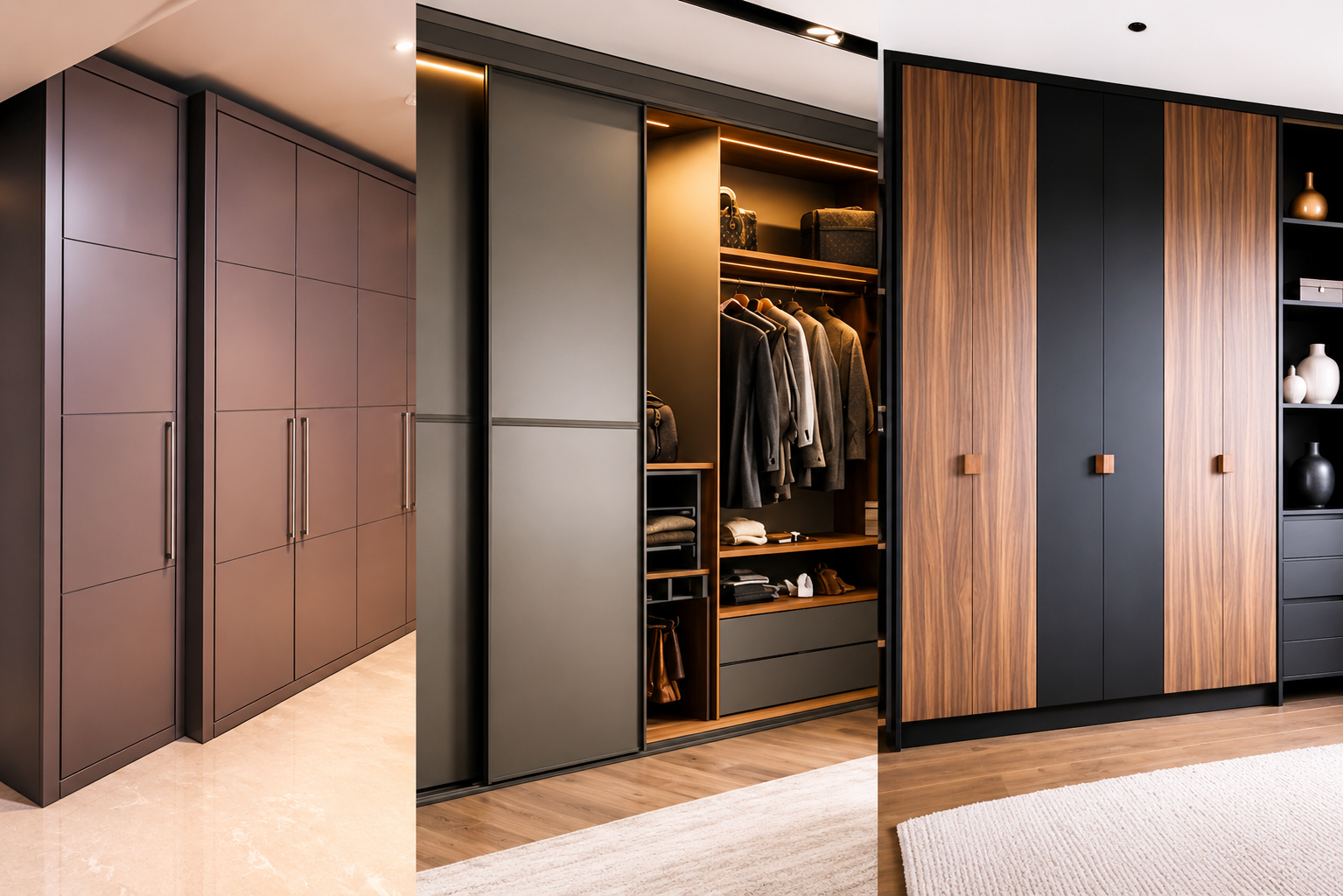
Quick answer: The right wooden wardrobe design depends on three things, how much floor space you can spare for the door swing, how you actually store your clothes (folded stacks versus hanging rails versus a mix of both), and how much natural light the room gets, since darker wood tones need more of it to avoid feeling closed in. Sliding-door wardrobes work best in compact bedrooms, hinged wardrobes suit larger rooms where you want full access to every shelf, walk-in layouts need a spare nook or alcove, and loft units add storage without taking up more wall space. The 20 ideas below cover all of these, with the wood and finish combinations you can ask for by name when you're getting quotes.
What Actually Makes a Wooden Wardrobe Design Work in a Bedroom?
Most people choose a wardrobe design the way they choose a sofa,based on a photo they liked on Pinterest or Instagram. The problem is that a wardrobe has to fit a specific room, hold specific things, and survive a specific climate, and a photo doesn't tell you any of that. Three things decide whether a design will actually work for you.
- Door mechanism versus room layout. A hinged wardrobe needs about 24–30 inches of clear space in front of it for the doors to swing open. If your bed is placed close to the wardrobe wall, or if there's a walkway right in front of it, sliding doors are the only practical option, regardless of how the hinged version looks in a catalogue.
- Internal layout versus what you actually own. A wardrobe designed around long hanging space looks great empty, but if most of your wardrobe is folded t-shirts, sarees, or kids' clothes, you'll end up stacking things on the floor within a month. Before picking a design, it helps to roughly count how much of your clothing is folded versus hung, and ask for a layout that matches that ratio rather than a standard 60/40 split.
- Wood tone versus the room's light. Deep wood tones like walnut or wenge look striking in showroom lighting, but in a bedroom with one window and curtains drawn most of the day, a large dark wardrobe can make the room feel smaller than it is. Lighter woods like oak, ash, or a sheesham finish with an open grain tend to work better in rooms that don't get much daylight, while richer tones suit larger rooms or ones with good natural or layered lighting.
Read more: 16+ Trending Modular Wardrobe Designs for a Stylish and Organized Space
What Are the Main Types of Wooden Wardrobe Designs?
Before getting into the 20 individual designs, it helps to know the broad categories they fall into. Most wooden wardrobes for bedrooms are built around one of these eight formats, and the 20 ideas below are grouped under them.
- Sliding door wardrobes: doors slide along a track instead of swinging out, ideal where floor space is tight
- Hinged (openable) wardrobes: traditional swing-out doors that give full access to every shelf at once
- Walk-in wardrobes: a dedicated small room or alcove lined with storage on two or three sides
- Corner wardrobes: built into a room corner to use a wall that would otherwise sit empty
- Wardrobes with loft storage: an upper cabinet section above the main wardrobe for items used a few times a year
- Wardrobes with mirror panels: one or more shutters double up as a dressing mirror
- Open or display wardrobes: shelving without doors, used in rooms where the wardrobe is also part of the decor
- Compact wardrobes for small bedrooms: narrower or shallower units designed for box rooms and studio layouts
20 Wooden Wardrobe Design Ideas for Your Bedroom
Here are 20 designs organised by the categories above, so you can jump straight to the ones that suit your room.
Sliding Door Wardrobes
Best when your bed sits close to the wardrobe wall, or when the room doubles up as a walkway.
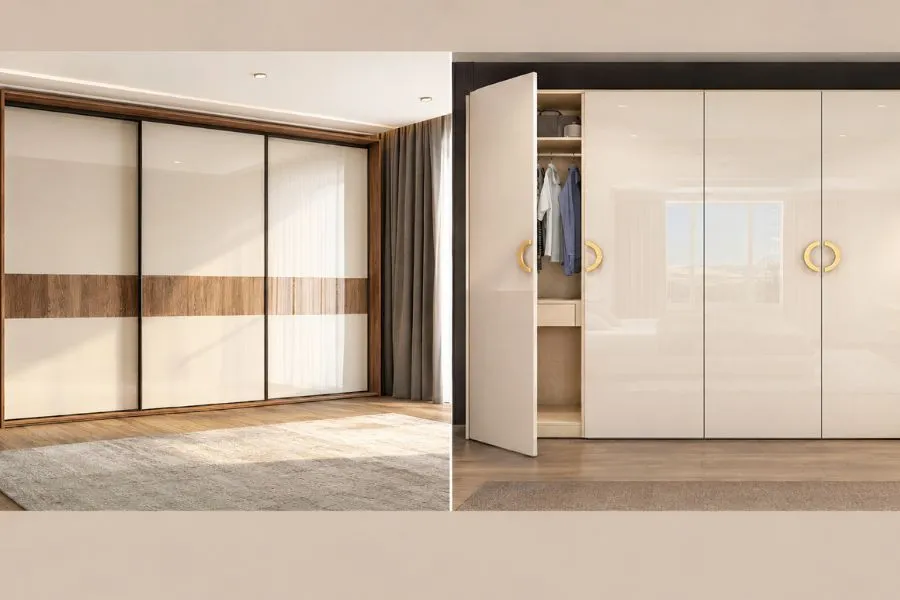
1. Sheesham-veneer sliding wardrobe with continuous grain: The wood grain is matched across both shutters so it reads as one large panel rather than two separate doors. Works particularly well as a backdrop to the bed in rooms with a warm, earthy colour palette.
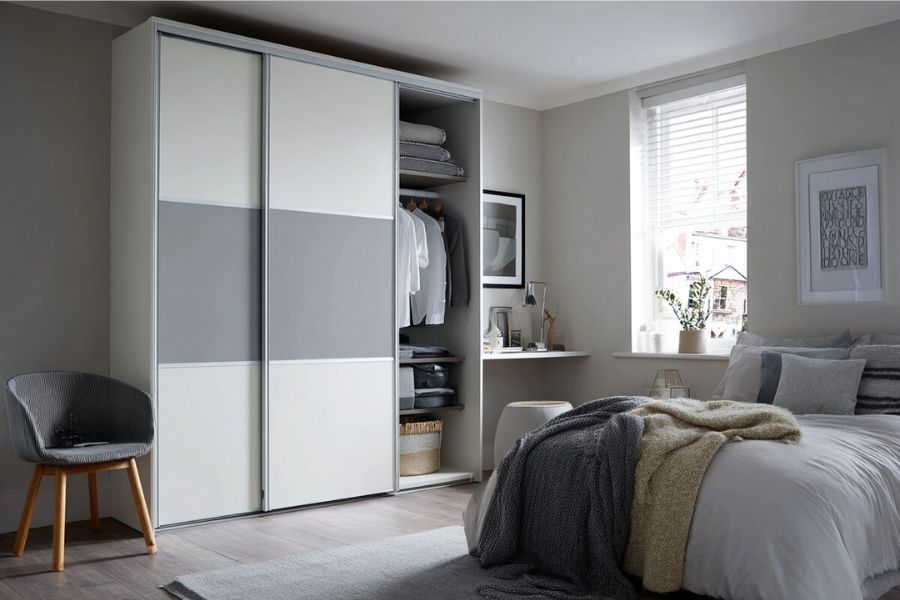
2. Two-tone sliding wardrobe in walnut and matte beige: One shutter in a walnut-toned laminate, the other in a soft matte beige or grey, divided by a thin brass or black metal profile. A common choice in contemporary bedrooms where the wardrobe is meant to look like furniture rather than storage.
3. Wood and frosted-glass sliding combination: The top half of each shutter is wood veneer; the bottom half is frosted or lacquered glass that conceals the lower shelves where shoes, bags, or laundry baskets usually end up. Useful if you want the wardrobe to look lighter without going fully glass.
4. Floor-to-ceiling sliding wardrobe with a built-in dresser end: The last two feet of the unit is finished as an open dresser with a mirror and small drawers, while sliding shutters cover the rest of the wardrobe. A practical option for rooms without space for a separate dressing table.
Hinged (Openable) Wardrobes
These suit larger bedrooms where door swing isn't a constraint, and you want to see everything inside at once.
5. Teak-finish hinged wardrobe with fluted panel inserts: Alternating shutters carry vertical fluted or grooved panels in the same teak tone, which adds texture without making the wardrobe look heavily carved or traditional.
6. Charcoal or deep green hinged wardrobe with brass handles and a wood interior: The exterior is finished in a dark matte laminate, while the inside — shelves, drawer fronts, hanging rod surrounds — is left in a warm wood tone. The contrast shows every time the doors open, which is a small detail that makes the wardrobe feel considered rather than generic.
7. Hinged wardrobe with one open shelving column: Instead of a wall of identical shutters, one column is left open, used for books, a clock, framed photos, or folded throws. Breaks up the visual repetition of doors without losing storage.
Walk-In Wardrobes
These need a spare alcove, a section of an oversized bedroom, or a wall that can be partitioned off — but they free up the rest of the room completely.
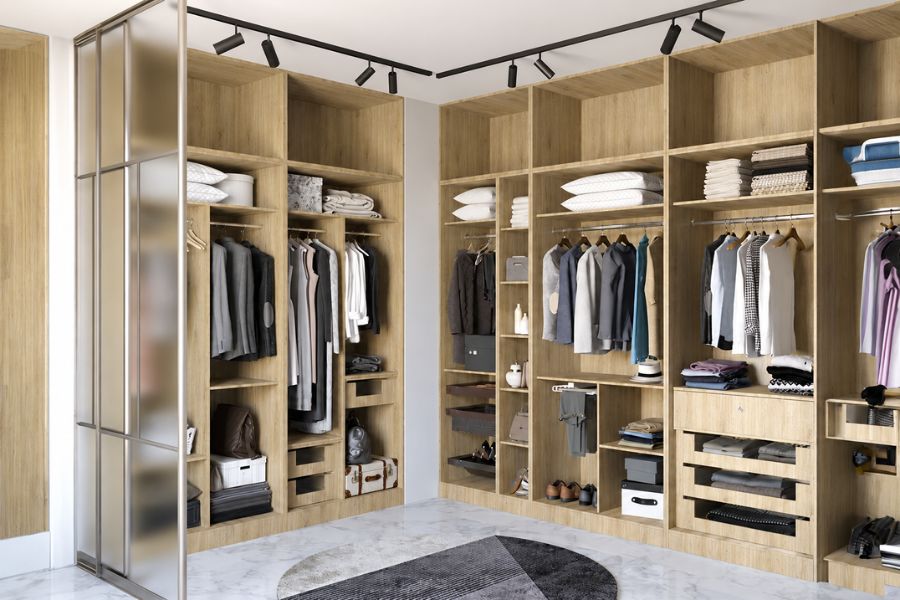
8. L-shaped walk-in with a central island dresser: Hanging rails and shelves run along two walls, with a low island unit in the middle holding drawers on both sides and a mirror on top. Works well if the alcove is at least 6 feet wide.
9. U-shaped walk-in with a fabric-topped bench: Storage wraps around three sides, with a cushioned bench along the shorter wall that also has shoe storage built into its base. Best suited to larger master bedrooms where the walk-in is roughly the size of a small room.
10. Walk-in with backlit open shelving for shoes and bags: Open shelves with frosted acrylic edges and a concealed LED strip behind them, used to display shoes, bags, or folded accessories. Gives the space more of a boutique feel than a typical storage room.
Corner Wardrobes
Useful when a bedroom has an awkward corner that would otherwise just hold a side table or sit empty.
11. Diagonal corner wardrobe with a single angled door: The wardrobe cuts across the corner at roughly 45 degrees with one door, freeing up both adjacent walls for a bed or a window. Internal space is slightly less than a straight wardrobe of the same width, but it solves a corner that's otherwise hard to use.
12. L-shaped corner wardrobe that extends into a study desk: One arm of the L holds hanging space and shelves, the other arm drops down into a desk with drawers underneath. A practical option for a shared kids' room or for anyone who works from the bedroom occasionally.
Wardrobes with Loft Storage
A loft section adds storage volume without taking up any extra floor area — useful for things you only need a few times a year.
13. Wardrobe with gas-strut lift-up loft shutters: The loft shutters lift upward on hydraulic struts instead of swinging outward, so nothing blocks the room when they're open. Suited to storing suitcases, out-of-season quilts, or extra bedding.
14. Loft wardrobe with a contrasting wood band along the top: The loft section is finished in a slightly different wood tone or texture than the lower cabinets, almost like a header, which visually marks it as a separate storage zone rather than making the whole wardrobe look like one tall block.
Wardrobes with Mirror Panels
Mirrors do double duty here, they make a wardrobe function as a dressing mirror and make a small room feel larger.
15. Sliding wardrobe with one full-height mirror shutter: One shutter is a full-length mirror; the other is wood veneer. Common in smaller bedrooms because it removes the need for a separate standing mirror and bounces light back into the room.
16. Hinged wardrobe with a mirror on the inside of one door: The mirror is mounted on the inside face of a door, so it's hidden when the wardrobe is closed. Useful for anyone who'd rather not have a mirror facing the bed but still wants one nearby, a preference that comes up often enough that it's worth asking for specifically.
Open or Display Wardrobes
These work in rooms where the wardrobe is part of the decor, not just storage hidden behind doors, and they require a bit more discipline to keep tidy.
17. Open wardrobe with wooden ladder-style shelving: No doors at all, clothes are folded onto open shelves or hung on an exposed rod between two angled wooden side supports. Suits Scandinavian or boho-styled rooms where the wardrobe's contents are part of the look.
18. Half-open wardrobe with closed base cabinets and open upper cubbies: The lower half is closed storage for everyday clothes, the upper half is a grid of open cubbies used to display folded sweaters, bags, or perfume bottles as styling pieces.
Compact Wardrobes for Small Bedrooms
For box rooms, studio apartments, or guest bedrooms where every inch of depth and width matters.
19. Slim two-door wardrobe under 6 feet wide with a foldout utility shelf: A narrower wardrobe with a small foldout shelf built into one side panel, useful as an ironing surface or a spot to lay out clothes without needing extra furniture in the room.
20. Wall-hugging wardrobe with a single sliding mirror door under 600mm deep: Built shallower than a standard wardrobe so it doesn't block a door swing or eat into a narrow walkway, with one mirrored sliding shutter to keep the room from feeling boxed in.
Which Wood Is Best for a Bedroom Wardrobe?
“Wooden wardrobe” covers a wide range of materials, from solid sheesham to engineered wood with a wood-look laminate, and the right choice depends on budget, how humid your city is, and how much weight the wardrobe will carry. Here's how the common options compare.
|
Material |
Look & Feel |
Durability |
Maintenance |
Best For |
|
Solid sheesham / teak |
Visible natural grain, warm tones, ages well |
Very high, can last decades if sealed properly |
Needs occasional polishing; sensitive to very dry or very humid extremes |
Statement pieces, hinged wardrobes, homes where the wardrobe is meant to last through renovations |
|
BWP plywood with veneer |
Real wood surface over an engineered core; grain looks natural |
High; BWP grade resists moisture well |
Low; occasional wiping, avoid harsh chemical cleaners |
Most mid-to-premium wardrobes where you want a real-wood look at a lower cost than solid wood |
|
BWP plywood with laminate |
Wide range of wood-look and solid finishes, very consistent appearance |
High; laminate surface resists scratches and stains |
Very low; wipes clean easily |
Sliding wardrobes, two-tone designs, households with kids where surfaces take daily wear |
|
MDF with laminate or acrylic |
Very smooth, even surface; works well for high-gloss or matte solid colours |
Moderate; doesn't handle prolonged moisture as well as plywood |
Low day to day, but edges need to stay sealed |
Budget-friendly wardrobes, loft shutters, and rooms with controlled humidity |
If you're in a city with a humid monsoon season, BWP (boilermonsoon-proof) plywood is worth asking about by name, since it's rated specifically to resist moisture-induced swelling, a common reason wardrobe shutters stop closing properly a couple of years after installation.
How Much Does a Custom Wooden Wardrobe Cost?
Wardrobe pricing is usually quoted per square foot of the wardrobe's front area (width × height), and the material you choose accounts for most of the difference.
- Plywood with laminate finish: roughly ₹1,400–₹1,800 per sq ft, the most common choice for sliding and hinged wardrobes
- BWP plywood with acrylic or PU finish: roughly ₹1,800–₹2,400 per sq ft., a step up in gloss and scratch resistance
- Veneer or solid wood finishes (sheesham, teak, walnut): roughly ₹2,500–₹3,500+ per sq ft, depends heavily on the wood species and how much of the surface is solid versus veneered
On top of the base price, a few additions move the total up noticeably: loft units add extra front area even though they're used less often, a mirror shutter typically adds a fixed cost per panel rather than a per-square-foot rate, and internal accessories like pull-out trouser racks, jewellery trays, or soft-close drawer channels are usually quoted separately. The most reliable way to get an accurate number is a site measurement, since wardrobe pricing depends on the exact width and height of the wall it's going into, not just a generic room size.
How Do You Choose a Wardrobe Design for a Small Bedroom?
Small bedrooms don't need smaller wardrobes — they need wardrobes that don't fight the room for space. A few adjustments make the biggest difference.
- Go with sliding doors first: they remove the need for the 24–30 inches of swing clearance that hinged doors require, which in a small room is often the difference between fitting a bed comfortably or not
- Stick to lighter wood tones or laminates: darker finishes absorb more light and can make a small wall feel like it's closing in, especially in rooms with one window
- Add a mirror on one shutter instead of a separate mirror: it removes the need for a standing mirror or a wall-mounted one, freeing up wall space elsewhere
- Keep the depth under 600mm if the wardrobe sits along a walkway: a standard 24-inch (about 610mm) depth is fine for most rooms, but in a genuinely tight layout, a shallower wardrobe can be the difference between a comfortable walkway and a cramped one
- Use the loft for off-season items instead of adding height to the main body: this keeps frequently used storage at an accessible height while still using the full vertical space of the wall
Read more: Small Bedroom Wardrobe Designs: Maximise Space & Storage
How Long Does It Take to Get a Custom Wardrobe Made?
From the first site visit to a finished, installed wardrobe, the process typically takes around three to four weeks, broken down roughly like this:
- Site visit and measurement: 1–2 days, a designer measures the wall, checks for any electrical points, switchboards, or skirting that the design needs to work around
- Design finalisation and material selection: 3–5 days, choosing the door type, internal layout, wood finish, and hardware, usually with at least one round of revisions
- Manufacturing: 10–15 days, the wardrobe is cut, edge-banded, and finished at the factory based on the final design
- Delivery and installation: 1–2 days, on-site assembly, fitting of shutters, and adjustment of hinges or sliding tracks
Timelines stretch if a design involves a lot of solid wood (which takes longer to finish and cure) or if changes are made after manufacturing has started, so it's worth locking in the design and finish before production begins rather than midway through.
Frequently Asked Questions
Q1 Is a wooden wardrobe better than a PVC or metal one?
For bedrooms, wood-based wardrobes (whether solid wood, plywood with veneer, or plywood with laminate) are generally preferred because they handle weight better, take a wider range of finishes, and tend to look more like furniture than storage. PVC and metal wardrobes can be more water-resistant, which makes them more common in bathrooms or utility areas, but they're less common as a primary
bedroom wardrobe in most Indian homes.
Q2 Can a wooden wardrobe be customised to fit any room size or shape?
Yes — that's the main advantage of going custom over a ready-made wardrobe. Widths, heights, depths, and internal layouts can all be adjusted to match the exact wall, including working around switchboards, AC units, or sloped ceilings, which a factory-standard wardrobe usually can't accommodate.
How do I maintain a wooden wardrobe's finish over time?
Wipe with a dry or slightly damp cloth rather than harsh chemical cleaners, which can strip laminate or dull a polished wood surface. For solid wood or veneer finishes, an occasional application of furniture polish (every few months) helps maintain the sheen. It's also worth checking sliding tracks and hinges once or twice a year, since most long-term issues come from hardware wear rather than the wood itself.
Q3 What's the difference between a modular wardrobe and a carpenter-made one?
A modular wardrobe is manufactured in a factory using machine-cut panels, which means tighter tolerances, consistent edge-banding, and finishes that are harder to replicate on-site. A carpenter-made wardrobe is built in your home from raw materials, which allows for last-minute changes but can vary more in finish quality and usually takes longer. Most homeowners now go modular for the main wardrobe and use carpentry only for small custom additions.
Q4 Do wooden wardrobes work well in humid climates?
They can, as long as the right grade of material is used. BWP (boiler-water-proof) plywood is specifically rated for moisture resistance and is the standard choice for humid regions. Solid wood needs proper sealing on all edges, including the back panel, since untreated edges are usually where moisture gets in first and causes swelling or warping.